
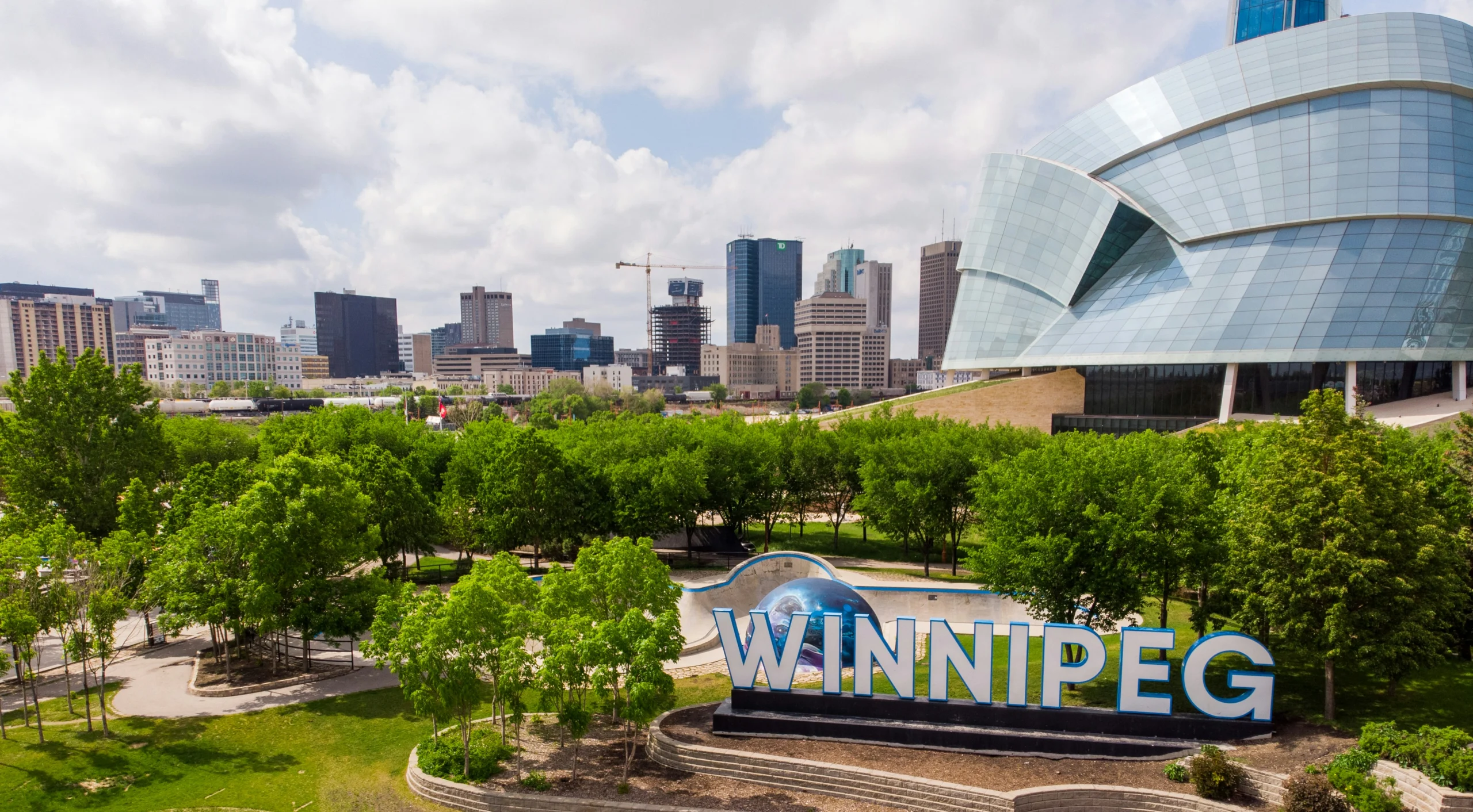
This museum tells the story of humanity’s long struggle against darkness. Those passing by call the way the light refracts off the building’s walls “the dance of light.” But that light actually reminds us of something else: Behind every right, there’s a human story.
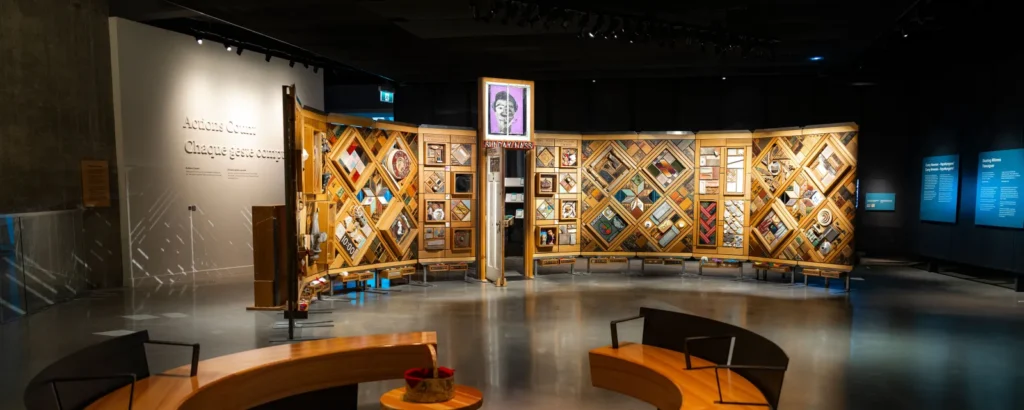
Inside the museum, an ordinary-looking pair of shoes are exhibited. These are the shoes of a child who survived World War II. The small label beside them reads:
“Wearing these meant keeping on walking, because, to stop would mean giving up”.
A little further on, there’s a notebook, a photograph, a handkerchief, a letter…
Each, a silent witness to a story of human rights. Each one seems to whisper: “I’m a silent witness to what has taken place.”
The architecture of the museum is a symbol in itself. Its lower floors, made of gray stone, symbolize periods filled with darkness and oppression. As one climbs upwards, the walls turn to glass, more light streams in, and transparency grows. With every step, the visitor notices something: As you move closer to the light, it is not just the museum’s walls that are illuminated, the human soul lights up as well.
This walk upwards is actually a journey taken by all of us. A walk from darkness to light, from fear to hope, and from silence to freedom.
Facing Human Rights
One of the museum’s digital projects is called “Facing Human Rights.” In this project, people from all over the world share their stories in their own voices.
When visitors put on their headphones and sit in front of the screen, they hear not only a narrative, but a face, a voice, a gaze. Each testimony turns into a powerful echo that resonates through the silence surrounding the room.
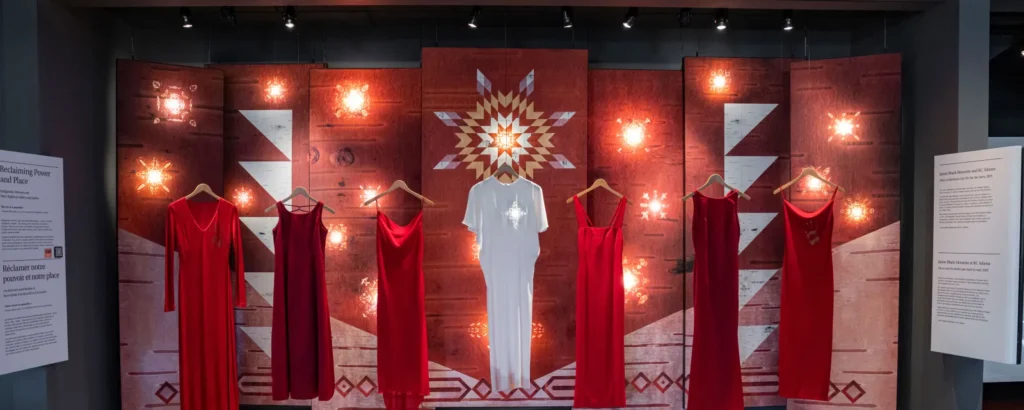
A woman who lost her family in the Rwandan genocide speaks today for peace. A young person from one of Canada’s Indigenous communities fights for justice by keeping the memory of a missing sister alive. A little child from the Middle East, with few words but eyes full of emotion, shares his struggle for achieving his dreams.
Each of these stories is personal, yet also universal. Though it may seem to belong to one person, it’s actually the shared voice of humanity…
The museum reminds us that human rights exist not only in the testimonies of the past, but also in the world we live in today. At the heart of that reminder lies a universal promise made to humanity exactly 77 years ago: the Universal Declaration of Human Rights.
This declaration, adopted by the United Nations in 1948, states that all human beings are born free and equal in dignity and rights.
It affirms that everyone has the right to life, liberty, and the security of person, but unfortunately, similar stories still occur every day in many parts of the world.
That’s why every article in the declaration is a call to action:
A promise humanity has made to itself.
And that promise only finds meaning when someone puts it into practice,
because rights do not exist on paper; they are realized in people’s hopes.
The Light that Sustains Hope
To sustain that hope, to make sure that a heart-wrenching photograph, a handkerchief bearing traces of pain, or a letter does not one day become a sad memory, there is an organization that has been striving for 30 years, in every region it operates, for human rights to exist in all areas of life: The Association for Social Development and Aid Mobilization (ASAM).
Through its works focused on human dignity, ASAM touches the lives of thousands in the fields of protection, education, psychosocial support, social cohesion, and advocacy. It strengthens access to rights for individuals of all ages and backgrounds, transforming human rights from an abstract concept into a natural part of everyday life.
And perhaps that’s why the light behind the glass shining on the banks of Winnipeg’s frozen river continues to radiate in every life ASAM strives to touch.