

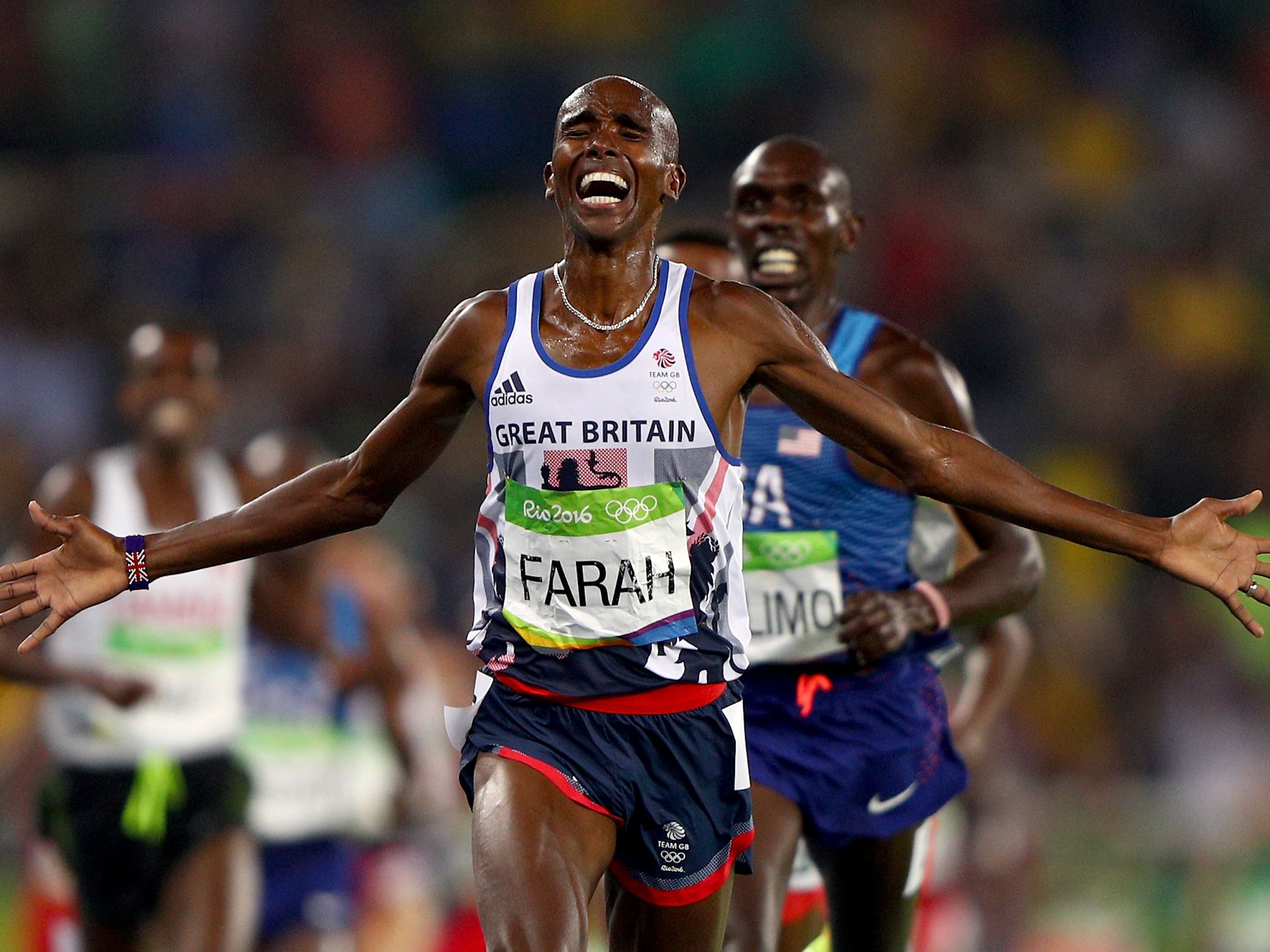
But the name he went by for years was not his real name. It was Hussein Abdi Kahin.
Born in Somalia, Hussein’s father was killed in the civil war when he was just four years old. He was separated from his family and sent to the neighboring country of Djibouti. When he was nine years old, a woman he had never met before convinced him that she could take him to his relatives who had been forced to migrate to different European countries due to the civil war. Documents belonging to another child were prepared, the name “Mohamed Farah” was written next to his photo, and he was taken to the UK under this identity. However, when he arrived in London, none of the life he had been promised awaited him.
He had with him his family’s address and contact details that would have allowed him to reach them. But according to Farah’s account, the woman ripped up the piece of paper containing this information right in front of him and threw it in the bin. He no longer knew how to reach them. He was forced to do housework, to cook, and to look after other children. At first, he was not even allowed to go to school. A child had been stripped of his identity, cut off from his family, and exploited for his labor.
Years later, while reflecting on those days in the BBC documentary The Real Mo Farah, he explained that he was not treated as part of the family and was always that kid who did everything. For a long time, he was not able to tell anyone what he had been through. Because, like so many others subjected to trafficking in persons, he was trapped in fear, isolation, and silence.
Freedom and Success Found on the Tracks
The turning point in his life came when he started attending school. His physical education teacher, Alan Watkinson, recognized not only his talent for running but also the distress underlying his behavior. Farah eventually told his teacher what he was going through. After his teachers contacted social services, he was placed in a safe family home. Running became the place where he finally felt free.
Although he initially wanted to be a football player, his teacher recognized his extraordinary talent for athletics. For the first time in his life, Farah was able to set his own direction and pace while running. In a later interview, he described running as his way out and a path to freedom, saying, “What really saved me was that I could run.”
Years later, that boy became one of the world’s most successful long-distance runners. By winning the 5,000-meter and 10,000-meter races at the 2012 London and 2016 Rio Olympics, he earned four Olympic gold medals for Great Britain. He also won world championships and received a knighthood in 2017 for his services to athletics. Yet behind every medal he won lay a truth he had been unable to share for years.
The Truth That Breaks the Silence: The Real Mo Farah
Farah was only able to publicly reveal that his real name was Hussein Abdi Kahin and that he had been subjected to trafficking as a child in 2022 through the BBC One documentary The Real Mo Farah. He said he wanted to be honest with his children, which played a key role in his decision to share his story. For years, the world had known how fast he was, but they had learned the story behind his identity and his childhood for the first time.
Global Human Trafficking in Figures
Today is July 30, World Day Against Trafficking in Persons.
The latest comparable data published in the 2024 Global Report of the United Nations Office on Drugs and Crime (UNODC) highlight the gravity of the situation. The number of globally identified victims of trafficking in persons has increased by 25 percent compared to pre-pandemic levels. Children account for 38 percent of the trafficking victims detected, and the number of child victims has risen by 31 percent. Forced labor has become the most common form of exploitation, accounting for 42 percent of identified cases.
These figures reveal that the domestic servitude to which Mo Farah was subjected as a child is not something that belongs to the past or an exceptional case. Trafficking in persons is not merely limited to illegal journeys across borders or sexual exploitation. Various forms also include deception, the use of false identities, the severing of family ties, restrictions on freedom of movement, domestic servitude, and forced labor in workplaces.
This crime can sometimes take place right before the public’s eyes or behind the closed doors of seemingly ordinary homes. For years, victims may be unable to speak out about what they have gone through due to fear, threats, insecurity, or a lack of awareness of their rights. Therefore, it is essential to promptly recognize the risks, create safe spaces where people can speak out, and provide referrals to appropriate support mechanisms.
To Notice, to Be a Voice, and to Fight
As part of its protection activities carried out with over 30 years of experience in the field, the Association for Social Development and Aid Mobilization (ASAM) continues to provide support to victims of trafficking in persons and vulnerable groups at risk of becoming victims. Contributing to Türkiye’s efforts to combat trafficking in persons, ASAM also closely follows national and international developments in this field. Identifying vulnerable persons, assessing their needs, and referring them to psychosocial, legal, and other relevant services are among the most important steps in this fight against trafficking.
Mo Farah’s athletic talent alone was not what changed his life. A teacher who recognized the hardship he was facing, people who listened to him, and support mechanisms that were implemented were also part of this journey. Because the fight against trafficking in persons begins with recognizing the unseen, and then listening to the voices of victims, protecting their rights, and making sure they are not left alone.
The world came to know him while he was running under someone else’s name.
But when he was finally able to share his story, he was no longer just a champion known by his own name; he also became the voice of many whose voices had gone unheard.